Tel: +86 18029163505
WhatsApp: +86 18029163505
Email: sales@miyoenergy.com




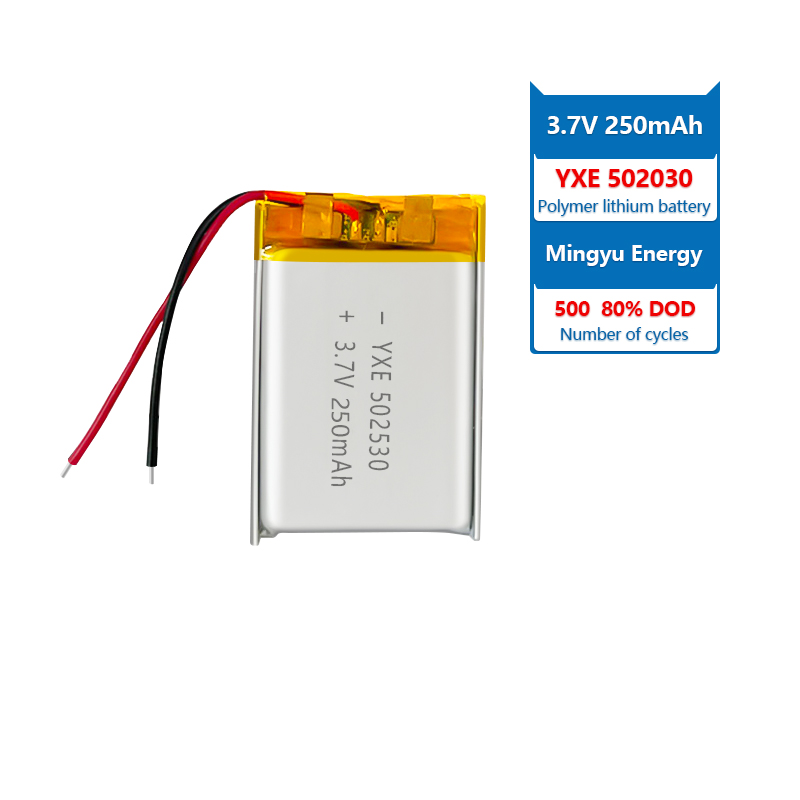 |

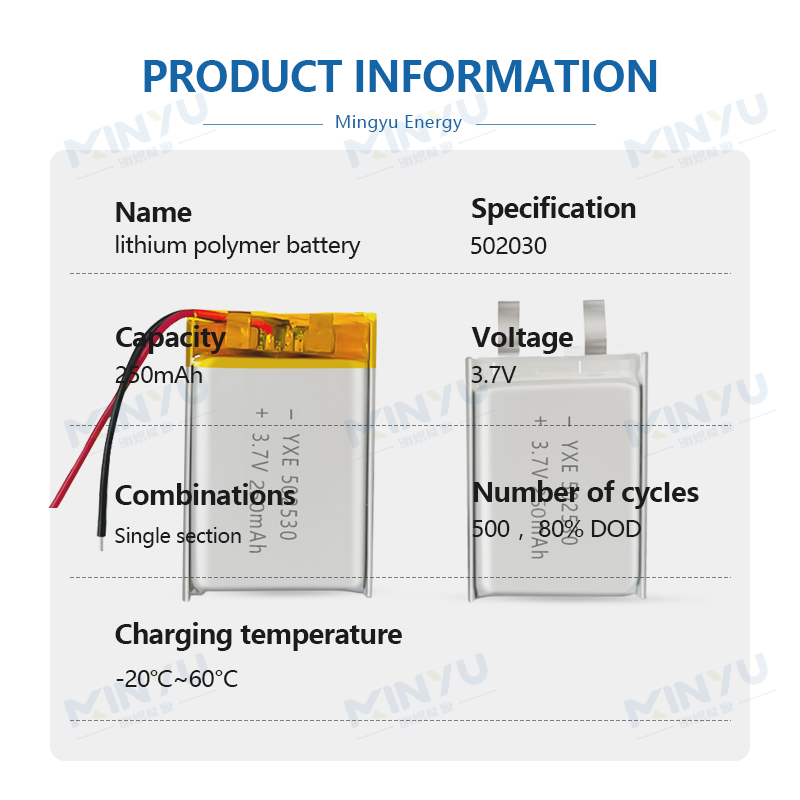
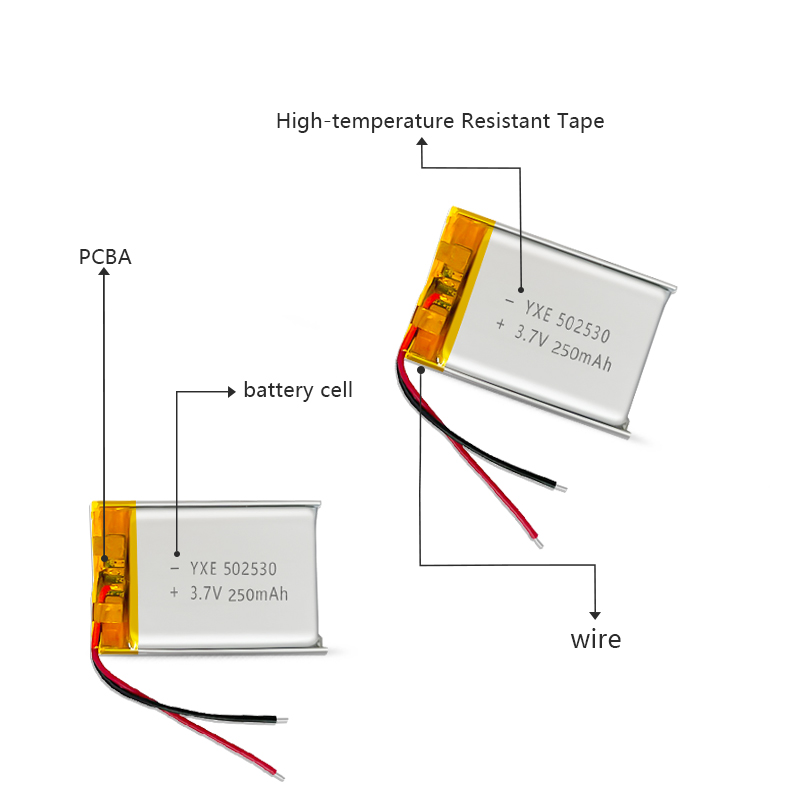
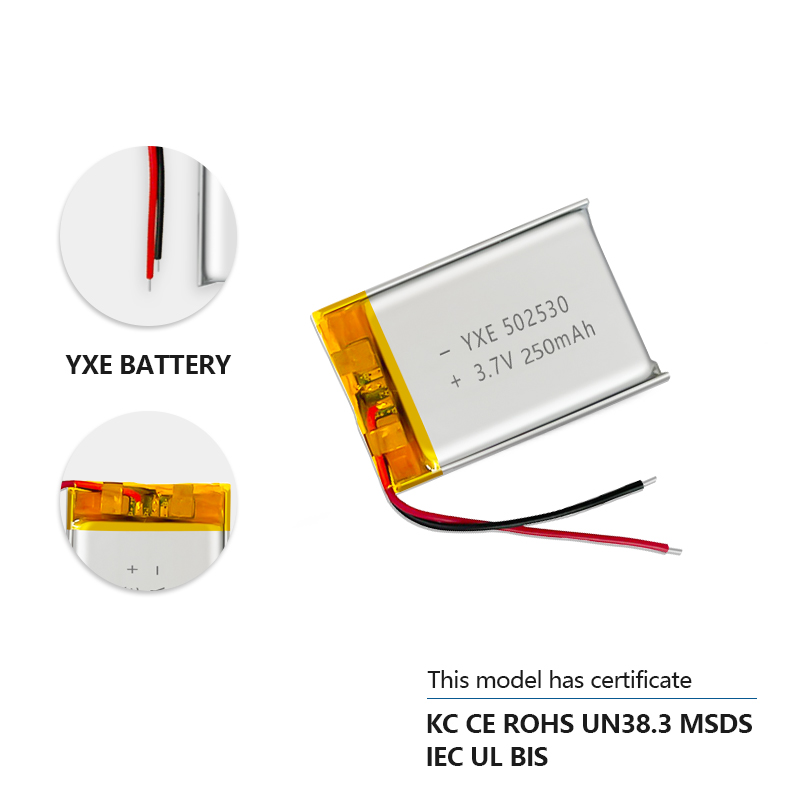

The 502030 lithium polymer battery offers a nominal voltage of 3.7V and a rated capacity of 250mAh, corresponding to 0.925Wh of nominal energy. It can be evaluated for electronic products with relatively low energy requirements. Actual operating time depends on device current consumption and operating conditions.
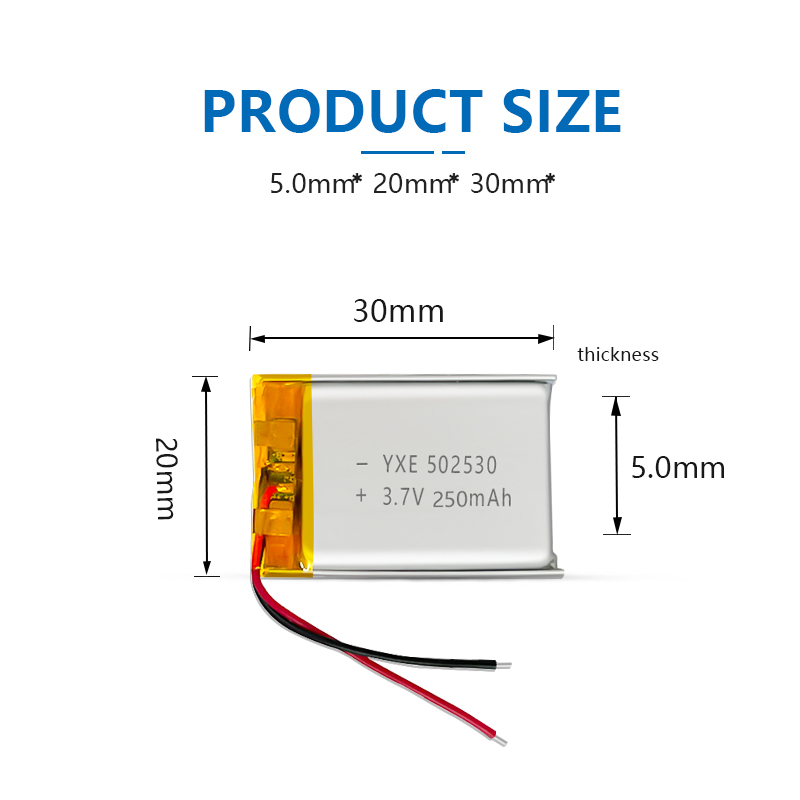
The 502030 battery features a compact pouch-cell format for products with limited internal space. Before integration, engineers should verify the actual cell dimensions, thickness tolerance, wire direction and available installation clearance.
Selecting the right battery requires matching the cell with the device's electrical characteristics. Mingyu can assist in reviewing required voltage, charging method, continuous discharge current, peak current and expected operating time.
Mingyu supports the evaluation of customized battery requirements, including connector types, lead wire arrangements and protection configurations. Final specifications and customization options are subject to engineering confirmation.
Product Model | 502030 |
SKU | YXE502030 |
Battery Type | Lithium Polymer Pouch Cell |
Nominal Voltage | 3.7V |
Rated Capacity | 250mAh |
Nominal Energy | 0.925Wh |
Cell Configuration | Single Cell |
Dimensions | Refer to approved drawing |
Weight | Confirm with datasheet |
Charging Voltage | Confirm with datasheet |
Standard Charging Current | Confirm with datasheet |
Maximum Discharge Current | Confirm with datasheet |
Operating Temperature | Confirm with datasheet |
Cycle Life | Subject to verified test conditions |
Protection Circuit | Configuration dependent |
Connector Type | Subject to project requirements |
Compact wireless accessories often require rechargeable battery solutions that balance capacity, device size and operating time. The 502030 250mAh battery may be evaluated for compatible designs after confirming voltage, operating current and battery compartment dimensions.
Small IoT sensors may require rechargeable power sources for periodic sensing and wireless data transmission. Battery selection should account for standby consumption, transmission current peaks and expected charging intervals.
Selected electronic learning accessories, such as compact reading devices and handheld educational tools, may use small lithium polymer pouch cells. Compatibility depends on power consumption, charging circuit design and installation space.
Miniature wearable electronics often have strict requirements for cell thickness, weight and usable capacity. The 502030 battery can be considered where its verified mechanical and electrical characteristics match the device requirements.
The 502030 250mAh lithium polymer battery is a compact rechargeable cell intended for consideration in small electronic products. Selecting an appropriate battery requires an understanding of the device's electrical requirements, installation limitations and expected usage patterns.
The 502030 cell has a rated capacity of 250mAh and nominal voltage of 3.7V, providing 0.925Wh of nominal energy.
Battery runtime cannot be determined from capacity alone. It depends on the device's average current consumption, peak load, discharge cutoff voltage, operating temperature and other conditions.
For initial estimates, engineers can compare rated capacity with average current consumption. Actual performance should be verified through testing under representative device operating conditions.
The 502030 model designation should not replace an approved technical drawing.
Before finalizing a battery design, confirm actual cell thickness, width, length and tolerances. Adequate installation clearance and suitable mechanical protection are important for pouch-cell integration.
Device manufacturers should also consider wiring direction, connector positioning and available space for any required protection circuit.
A 3.7V nominal lithium-ion polymer cell requires an appropriate charging method and protective measures.
Customers should confirm the charging voltage, charging current, discharge current limits and battery protection requirements according to the approved product datasheet.
Whether the supplied battery includes an integrated protection circuit depends on the selected configuration.
Mingyu Energy provides lithium battery manufacturing and technical support for equipment manufacturers, product developers and international distributors.
Our team can evaluate battery requirements involving:
Required voltage and rated capacity
Available battery installation space
Continuous and peak current requirements
Charging specifications
Connector type and lead wire arrangement
Protection circuit configuration
Environmental operating conditions
Production quantity and delivery requirements
Customized battery configurations are subject to technical feasibility, sample confirmation and project-specific requirements.
Battery selection and supply should be supported by suitable technical documentation and quality verification.
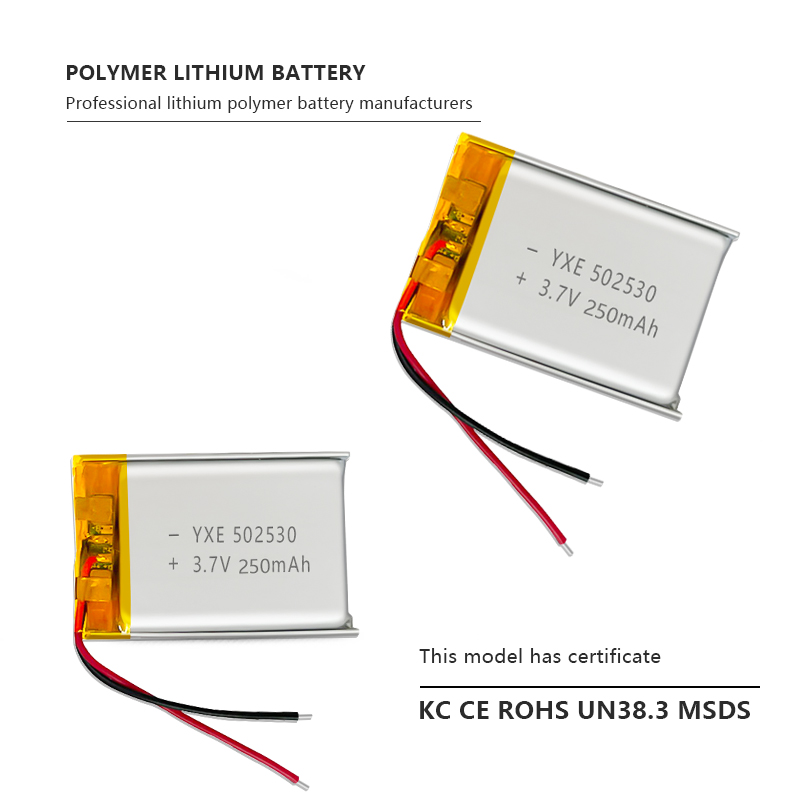
Mingyu can discuss product datasheets, technical drawings, available testing documentation and applicable compliance information for the selected battery configuration.
Customers importing lithium batteries should verify the relevant transportation, product safety and market requirements for their destination country.
Looking for a 502030 3.7V 250mAh rechargeable lithium polymer battery for a compact electronic product?
Contact Mingyu Energy with your device requirements, battery specifications, estimated purchasing quantity and destination country.
Our team can review your request and discuss battery selection, sample arrangements, customization requirements and bulk-order quotations.